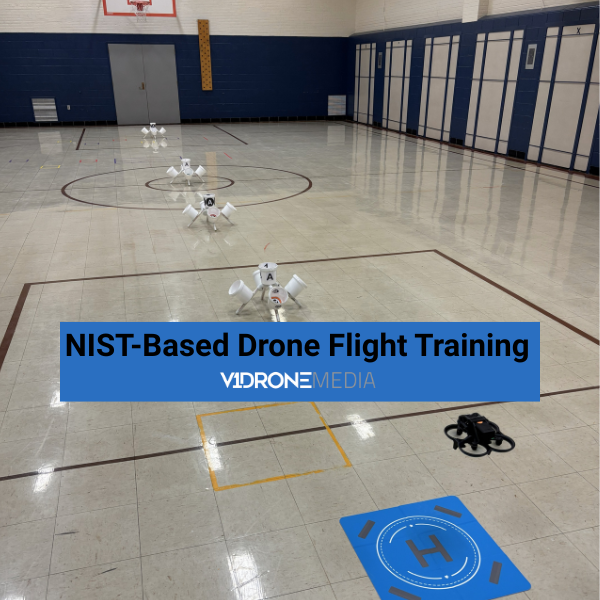
NIST-Based Drone Flight Training for Police & Public Safety

Why Professional Drone Programs Require Standards-Based Flight Training

Professional drone programs are expected to perform safely, consistently, and under pressure. Whether the mission involves search and rescue, scene documentation, tactical overwatch, or operational support, there is little margin for error when aircraft are deployed in real-world conditions.

One of the most common misconceptions in drone operations is that flight proficiency is permanent once certification is achieved. In reality, flight skills are perishable. Without structured practice and evaluation, even experienced pilots can see skill decay over time. That is why professional aviation — and increasingly professional drone programs — rely on initial and ongoing, standards-based flight training.

This is where NIST-based flight training plays a critical role.

What Is the NIST Drone Flight Training Course?

The NIST (National Institute of Standards and Technology) is an independent federal organization known for developing objective, repeatable standards across technical and operational domains. In the drone space, NIST has developed standardized flight courses designed to evaluate pilot proficiency through clearly defined tasks and measurable outcomes.

The NIST drone flight course is not a certification and it is not academic theory. It is a task-based, hands-on flight skills framework focused on how well a pilot can control an aircraft, maintain situational awareness, and execute precise maneuvers under defined conditions.

Because the course is standardized and repeatable, it allows organizations to evaluate flight performance objectively — something that resonates strongly with police departments, public safety agencies, and operational teams that need defensible training standards.

Borrowed Directly from Airline Recurrent Training Culture

The philosophy behind our drone flight training at V1DroneMedia is borrowed directly from airline recurrent training culture.

The owner and lead instructor of V1DroneMedia is a professionally trained airline pilot with more than 20 years of experience in airline operations (read Jason Damman’s story here). In that world, training does not end once a pilot is hired or certified. Airline pilots undergo mandatory recurrent training once or twice per year to maintain proficiency, reinforce safety standards, and integrate new knowledge.

Recurrent training in aviation includes:

  • Continuous evaluation of flight skills

  • Reinforcement of standard operating procedures

  • Incorporation of FAA guidance and regulatory updates

  • Lessons learned from accidents and incidents across the industry

This culture exists for one reason: repeatable performance and accident avoidance depend on structured, ongoing training. Pilots are trained not just to know what to do, but to develop automatic responses that hold up under stress.

That same philosophy translates directly to professional drone operations.

Training Flight “Muscles” and Automatic Responses

In aviation, pilots often talk about training their “flight muscles.” This refers to muscle memory, coordination, and instinctive control inputs that allow pilots to respond correctly without hesitation.

Under stress, cognitive bandwidth is limited. The more a pilot has to consciously think about basic aircraft control, the greater the risk of errors. Structured flight training builds automatic responses that reduce workload and improve safety when conditions are less than ideal.

For airline pilots, this training happens in simulators. For drone pilots, structured and repeatable flight courses like the NIST framework serve the same purpose.

Why This Model Applies Directly to Drone Operations

Many drone programs — particularly in policing and public safety — do not fly every day. Flights may be intermittent, mission-driven, and time-sensitive. When a call comes in, there is rarely time for a warm-up or refresher.

Without structured training, this creates risk:

  • Skill decay from infrequent flying

  • Overconfidence in basic maneuvers

  • Slower or incorrect responses under pressure

Structured flight training matters especially when pilots don’t fly every day — because missions don’t wait for skills to come back.

NIST-Based Drone Flight Training for Learning and Refresher Training

One of the strengths of the NIST flight course is that it works equally well for pilots learning professional flight skills and for experienced pilots who need refresher training.

For newer pilots, the course provides structured flight training beyond hobby-level flying. It introduces professional expectations around precision, control, and consistency in a way that builds a strong foundation for operational use.

For experienced pilots, the same course functions as a refresher. It reinforces fundamentals, identifies bad habits that can develop over time, and restores confidence before real-world missions.

In our classes, we regularly train mixed experience levels together. When group sizes allow, we adjust instruction in real time — breaking into smaller groups when needed — to ensure each pilot is challenged appropriately while still benefiting from a shared training standard.

This approach helps organizations build consistency across their teams rather than relying on individual flying styles.

How NIST-Based Training Improves Flight Skills

Precision and Aircraft Control

Pilots develop tighter control through defined maneuvers that emphasize smooth inputs, controlled altitude changes, and precise lateral movement — skills that directly translate to operational environments.

Situational Awareness

The course reinforces orientation management, aircraft positioning, and multi-axis control while performing tasks, helping pilots maintain awareness beyond simply keeping the drone airborne.

Consistency and Measurable Improvement

Because the course layout is standardized, pilots can repeat the same tasks over time and objectively see improvement. This removes guesswork from training and provides clear feedback for both pilots and leadership.
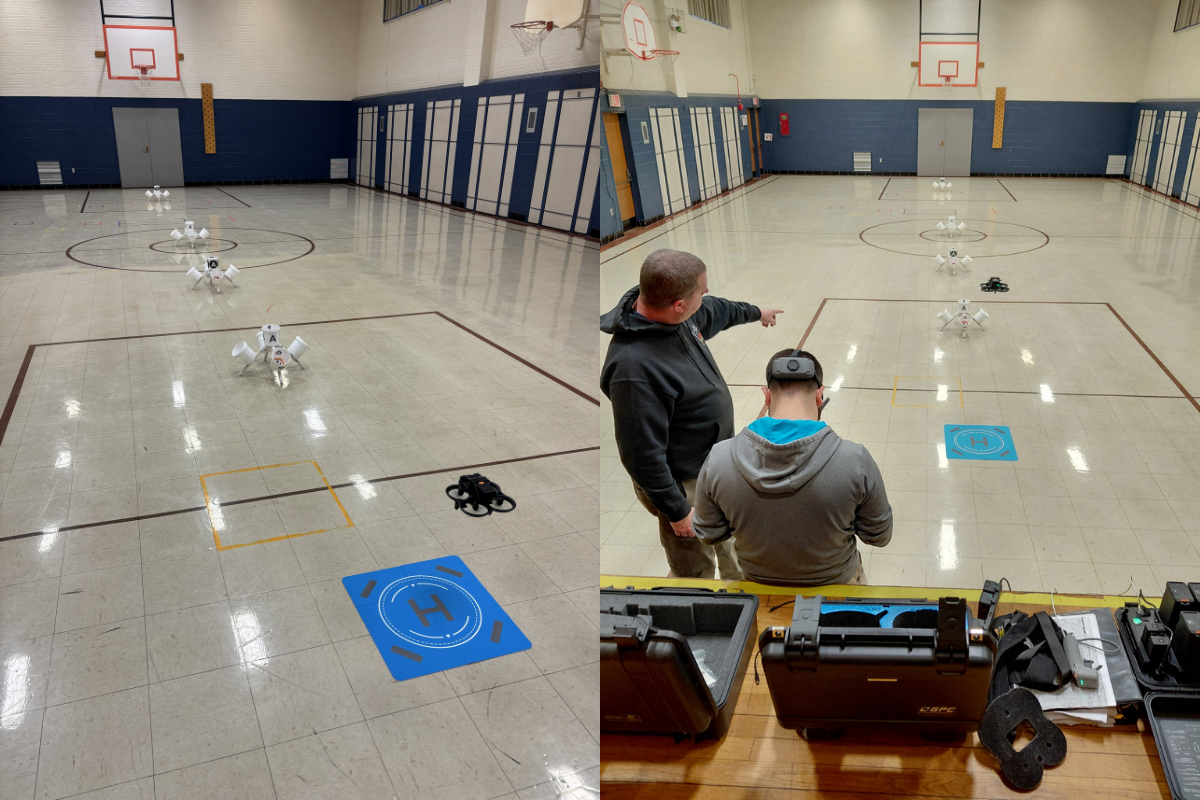
Public safety drone pilots flying standardized NIST flight course

How We Integrate NIST Training into Our 2-Day Drone Operations & Flight Training Class

NIST-based flight exercises are a core component of our Drone Operations & Flight Training (2-day class). The course balances operational context, safety considerations, and hands-on flight proficiency to ensure training is practical and applicable.

Pilots receive instructor-guided feedback throughout the course, with progressive skill building that mirrors real-world operational demands. The emphasis is on standards, repetition, and readiness — the same principles that underpin airline recurrent training.

This approach ensures pilots leave not only with improved skills, but with a clear understanding of what professional flight performance looks like.
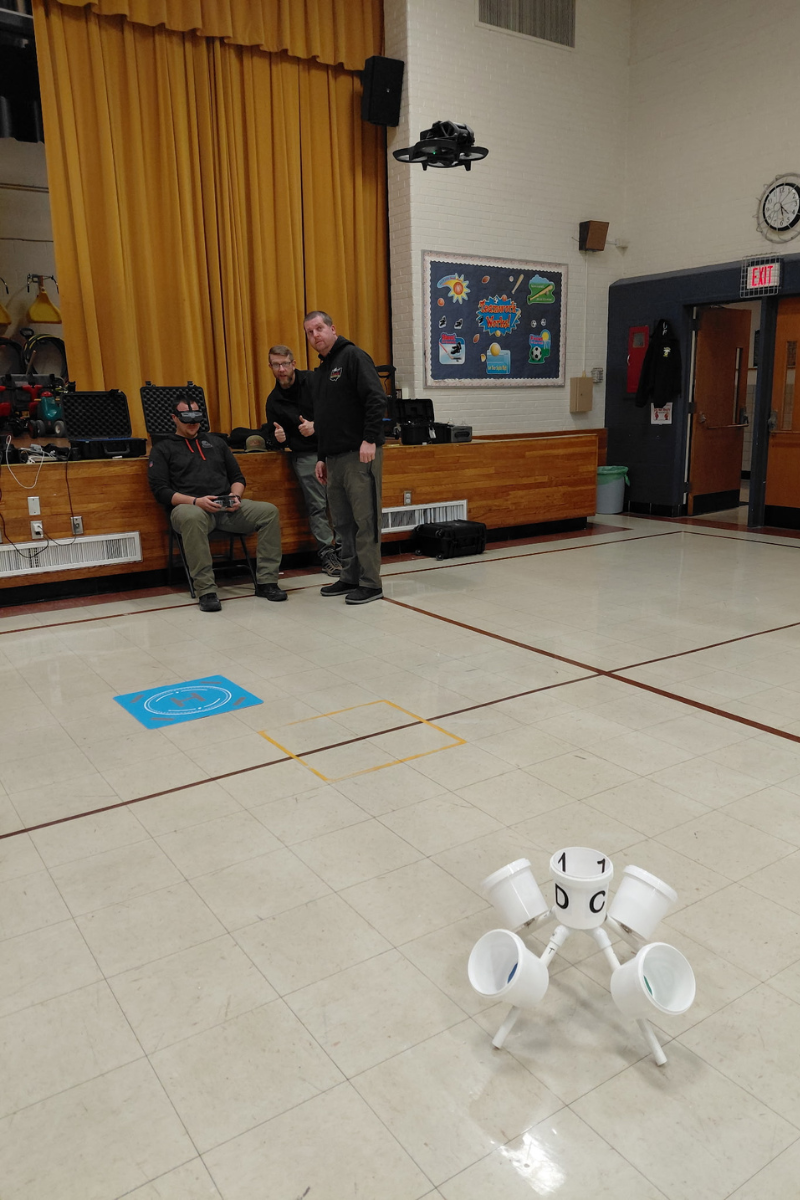
Police officers completing NIST-based drone flight training course

Building Mission-Ready Drone Programs Through Ongoing Training

For command staff and program managers, structured flight training is more than a technical exercise. It is a leadership decision that directly impacts safety, performance, and program credibility.

NIST-based training provides a defensible framework for both learning and refresher training, helping organizations maintain high standards over time rather than relying on ad-hoc flying.

Mission-ready drone programs are built through intentional, ongoing training — not last-minute preparation.

Learn More

If your organization is looking to strengthen flight proficiency, reinforce safety standards, or implement structured refresher training, we invite you to learn more about our Drone Operations & Flight Training (2-day class) or Request a Consultation to discuss your training needs.

Read More

COA vs. Part 107: Which Path Is Best for Police and Fire Drone Operations?

As drone technology rapidly evolves into an indispensable tool for public safety operations, law enforcement and fire departments across the United States face a critical strategic decision: should they pursue a Certificate of Authorization (COA) from the Federal Aviation Administration (FAA) or invest in Part 107 certification for their drone pilots? This choice can significantly impact a department's operational capabilities, timelines, training requirements, and long-term program success.

While both pathways offer legitimate routes to legal drone operations for first responder operations, understanding their distinct differences—and the strategic advantages and limitations of each approach—can help departments build more robust, flexible, and sustainable drone programs that serve their communities effectively.

In this blog post, through careful analysis and real-world experience, we will walk you through why many public safety agencies are discovering that beginning with Part 107 certification provides more substantial long-term benefits and creates a stronger foundation for their unmanned aircraft systems (UAS) operations.

Understanding the Options

COA – Certificate of Authorization

A Certificate of Authorization, commonly known as a COA, is a specialized authorization issued by the FAA specifically to public agencies, including police departments, fire services, and emergency response teams, to conduct drone operations for governmental functions. This authorization empowers departments to implement their own pilot certification processes and typically includes broader permissions for conducting more complex mission profiles, such as Beyond Visual Line of Sight (BVLOS) operations, night flights, and emergency response scenarios without requiring additional waivers. The COA framework was designed to give public agencies greater operational flexibility while maintaining safety standards.

Part 107 – Remote Pilot Certificate

The FAA's Part 107 certification represents the standard regulatory pathway established for commercial drone pilots across all sectors. This certification requires individual pilots to demonstrate their knowledge and competency by passing a comprehensive FAA examination covering airspace regulations, weather patterns, flight operations, and safety protocols. While initially created for commercial operations, public safety personnel can effectively operate under Part 107 certification, either as their primary authorization or in conjunction with a departmental COA. A dual approach has become increasingly popular among forward-thinking agencies that start with Part 107 Certification, and then get their COA in the long-term.

The Process: COA vs. Part 107 – What Does It Take?

The COA is essentially a waiver that allows public entities—like police or fire departments—to operate drones for specific public aircraft operations (PAO). When a police or fire department wants to apply for a Certificate of Authorization (COA) and establish a compliant and effective drone program, they typically need support from a combination of internal leaders, FAA resources, and external consultants or training providers.

Getting a Public Safety COA (Certificate of Authorization) can be a lengthy, bureaucratic process that involved multiple layers of documentation, planning, and coordination.

Step-by-step Breakdown of the COA Application Process and Steps:

1. Establish the Department as a Public Aircraft Operator (PAO)

  • The police department must first be recognized as a Public Aircraft Operator by the FAA.

  • This includes submitting documentation that proves the entity is a governmental agency and outlining its mission and oversight.

2. Designate a UAS Program Coordinator

  • The department must appoint someone responsible for managing the UAS (drone) program, including COA application, recordkeeping, and communication with the FAA.

3. Develop a CONOPS (Concept of Operations)

  • A detailed document describing:

    • Types of missions (search and rescue, crime scene documentation, etc.)

    • Areas of operation

    • Types of aircraft to be used

    • Airspace details

    • Communications and deconfliction methods with manned aircraft

    • Emergency procedures

4. Create Standard Operating Procedures (SOPs)

  • A formal guide for how missions will be conducted safely and legally

  • Must address:

    • Pilot qualifications

    • Maintenance schedules

    • Recordkeeping

    • Emergency response protocols

    • Public safety coordination

5. Apply Through FAA's DroneZone or CAPS Portal

  • Upload all documentation, including CONOPS, SOPs, maps, and personnel details

  • Select either:

    • Blanket COA: Allows flights under 400 feet in Class G airspace (typically rural missions)

    • Jurisdictional COA: Specific to the agency’s operating area

    • SGI (Special Government Interest) Waivers: For urgent, short-notice missions like disaster response

6. FAA Review and Back-and-Forth Communication

  • The FAA may request revisions or clarifications, which will require outside expert and internal designated officer coordination

  • Departments often face delays due to documentation errors or insufficient detail

  • It can take 30 to 90+ days (sometimes longer) for final approval

7. Training and Implementation

  • Every pilot must be trained in line with the COA-specific SOPs, which means there has to be someone designated internally to train and test new department drone pilots

  • Department must maintain records, conduct periodic reviews, and stay compliant within the COA specific SOPs

8. Annual Renewal and Amendments

  • COAs typically expire annually and must be re-applied for

  • Any change in mission type, location, or aircraft must be formally amended with the FAA

Typically, the department will need external agency or legal support to draw up and process the documentation, and someone inside the department designated to coordinate these efforts, which may take several months. Long-term there will need to be someone well-trained on the COA’s SOPs to keep the department compliant and to train new pilots.

Why It’s Considered Bureaucratic:

  • Time-consuming: The initial approval process is slow and involves waiting for FAA response cycles

  • Documentation-heavy: Every mission type and protocol must be detailed in advance

  • Limited flexibility: Pilots can’t adapt quickly to changes or emergencies unless a COA or waiver allows it

  • Administrative burden: Updating COAs, maintaining records, and reporting flight logs is labor-intensive

  • Non-transferable credentials: Officers trained under a COA can't carry their flight credentials to another agency or use them commercially

Step-by-Step Process to Get Part 107 Certified for Police Drone Operations:

Unlike the bureaucratic nature of the COA process, obtaining Part 107 certification is much faster, simpler, and standardized, making it a popular choice for police departments starting or scaling drone programs. Here’s a breakdown of how departments can get officers FAA-certified and flying legally in just a few weeks.

1. Choose Who Will Become Your Drone Pilots

Start by identifying officers who are interested to fly. Think about their roles—are they patrol, search and rescue, or supervisory? These will impact how and when they’ll use drones in the field. Once you’ve selected your pilots, decide whether they’ll self-study or take a formal prep course. Many public safety agencies opt for in-person Part 107 exam prep training to ensure faster success on the test.

2. Study for the FAA Part 107 Knowledge Test

This test is the key to becoming a certified remote pilot. It covers all the essentials: airspace, weather patterns, emergency procedures, drone rules, and how to read aeronautical charts. Officers can study on their own using FAA handbooks or YouTube videos—but most departments prefer a structured prep course, especially ones tailored to public safety operations, like V1DroneMedia’s Course. It speeds up the learning process and boosts pass rates. If you are deciding between an online and an in-person course, read our blog post FAA Part 107 Online Course vs. In-Person: Which Actually Gets You Licensed?

V1DroneMedia instructor Jason Damman teaches how to read aeronautical charts

3. Take the Test at an FAA-Authorized Center

Once they’re ready, your officers will schedule the Part 107 exam through PSI (the FAA’s testing provider).

  • The test costs around $175.

  • It has 60 multiple-choice questions.

  • A 70% score is needed to pass.

The exam’s not overly difficult with the right prep, and officers can usually complete it in under two hours. Many departments cover the exam cost as part of their training budget.

4. Apply for the Remote Pilot Certificate

After passing the test, the officer logs into the FAA’s IACRA system and submits an application for their Remote Pilot Certificate.

  • The FAA conducts a quick background check.

  • Within a few days, they’ll receive a temporary certificate.

  • A permanent plastic card is mailed out in a few weeks.

This certificate is theirs—it stays with them even if they transfer or leave the department.

5. Start Flying—Within Part 107 Rules

Once certified, officers can fly legally under the FAA’s Part 107 regulations. These rules allow for plenty of real-world use cases for police work—like missing person searches, accident scene documentation, or crowd monitoring.

Some of the key guidelines include:

  • Keep drones under 400 feet AGL (above ground level)

  • Maintain visual line of sight at all times

  • Fly during daylight unless you have a waiver

  • Use LAANC (Low Altitude Authorization and Notification Capability) for fast airspace approval in controlled zones near airports

6. Keep Certifications Current—Every 2 Years

Every 24 months, remote pilots must complete online recurrent training directly through the FAA website.

  • No more retesting required—just a short, free course

  • It's a great refresher and keeps everyone updated on rule changes

Why This Path Works for Police Departments

  • Fast and predictable: Officers can go from zero to certified in 2–4 weeks

  • Department-friendly: There’s no need to develop FAA-facing documentation or wait 60+ days

  • Credential stays with the officer: Even if they leave or get promoted, the certificate is theirs

  • Great morale booster: Officers can even use their license legally outside of work, from flying real estate jobs to freelance photography. Here is a guide to Careers in the Drone Industry that they could pursue as a side hustle or a retirement gig.

If your team needs to operate beyond standard rules (like flying at night or over people), you can request specific waivers from the FAA.

These waivers are applied for through the FAA Drone Zone and may require:

  • A written risk mitigation plan

  • Department SOPs (Standard Operating Procedures)

  • Proof of pilot competency

Waivers are commonly approved for public safety missions when the paperwork is solid and the justification is clear.

COA vs. Part 107: A Side-By-Side Comparison

COA vs Part 107 comparison table for First Responders

COA vs. Part 107 Comparison

Comparative Analysis: COA vs. Part 107

Processing Time and Flexibility

Operational Scope

  • COA: Provides agencies with the ability to conduct specialized operations, such as beyond visual line of sight (BVLOS) flights and night operations, often essential for complex missions.

  • Part 107: While more restrictive, Part 107 allows for a broad range of operations, with waivers available for specific activities like night flights and operations over people.

Training and Certification

  • COA: Agencies are responsible for certifying their pilots, which can lead to variability in training standards.

  • Part 107: Ensures a standardized level of knowledge and proficiency among pilots, fostering consistency and safety.


But what is the feedback from the field on getting COA vs. Part 107 to start drone operations within the agencies? Here is what some departments say:

Testimonials: Why Agencies Prefer Part 107

The Los Angeles Fire Department's drone program has become a model for other agencies nationwide, largely due to its emphasis on maintaining a roster of FAA-certified pilots to ensure operational consistency, build public trust, and maintain compatibility with insurance requirements. Fields and other program leaders have consistently observed that depending exclusively on COAs, without the foundation of properly trained and tested individual pilots, can create potentially problematic legal gray areas and operational vulnerabilities. Their experience suggests that the investment in Part 107 certification pays dividends in program stability and public confidence.

When discussing Drone Public Safety Best Practices, FAA experts are in agreement:

"Part 107 certification is highly, highly, highly recommended." — Richard Fields, Los Angeles Fire Department

Similarly, Tom Agos of the Gurnee Police Department in Illinois offered valuable insight when he stated:

"We feel like it's smart to do both because it adds a certain air of professionalism... It's for the benefit and protection of our officers and to reassure the public that we are taking all responsible steps to do things safely and by the book."

This perspective reflects a growing consensus among public safety agencies that combining Part 107 certification with COA authorization provides the most comprehensive and professional approach to drone operations. The dual certification strategy demonstrates a commitment to excellence while maintaining operational flexibility for various mission requirements.

Conclusion: The Smart Move Is Part 107 First

For public safety agencies at any stage of their drone program development (but especially as they are trying to get it off the ground), prioritizing Part 107 certification represents a strategic investment in program success. This certification ensures professional cross-industry and agency standards, accelerates deployment and use, operational flexibility, and creates valuable opportunities for personnel development and additional income streams.

Long-term, combining existing Part 107 certification of personnel with COA as the department drone programs mature creates an optimal framework for both regulatory compliance and mission-specific adaptability. This approach has proven successful for numerous agencies nationwide. However, getting regulatory compliance under Part 107 or COA is not everything that a department needs when establishing a drone program. Gaining hands-on flying experience and specialized mission training is essential for using drones effectively in first responder drone operations.

Need help getting your department Part 107 certified and operational with hands-on drone training? V1DroneMedia provides comprehensive first responder group training programs, hands-on flight practice sessions, and specialized consulting services designed specifically for law enforcement and fire department drone operations. Our instructors, aviation and law enforcement professionals, have trained hundreds of first responders and departments, helping agencies get their drone programs off the ground. Contact Us today to start conversation about what’s right for your department, and sign up for our First Responder Drone Newsletter to stay informed on drone industry happenings that affect law enforcement operations.


Read More