
NIST-Based Drone Flight Training for Police & Public Safety
Why Professional Drone Programs Require Standards-Based Flight Training
Professional drone programs are expected to perform safely, consistently, and under pressure. Whether the mission involves search and rescue, scene documentation, tactical overwatch, or operational support, there is little margin for error when aircraft are deployed in real-world conditions.
One of the most common misconceptions in drone operations is that flight proficiency is permanent once certification is achieved. In reality, flight skills are perishable. Without structured practice and evaluation, even experienced pilots can see skill decay over time. That is why professional aviation — and increasingly professional drone programs — rely on initial and ongoing, standards-based flight training.
This is where NIST-based flight training plays a critical role.
What Is the NIST Drone Flight Training Course?
The NIST (National Institute of Standards and Technology) is an independent federal organization known for developing objective, repeatable standards across technical and operational domains. In the drone space, NIST has developed standardized flight courses designed to evaluate pilot proficiency through clearly defined tasks and measurable outcomes.
The NIST drone flight course is not a certification and it is not academic theory. It is a task-based, hands-on flight skills framework focused on how well a pilot can control an aircraft, maintain situational awareness, and execute precise maneuvers under defined conditions.
Because the course is standardized and repeatable, it allows organizations to evaluate flight performance objectively — something that resonates strongly with police departments, public safety agencies, and operational teams that need defensible training standards.
Borrowed Directly from Airline Recurrent Training Culture
The philosophy behind our drone flight training at V1DroneMedia is borrowed directly from airline recurrent training culture.
The owner and lead instructor of V1DroneMedia is a professionally trained airline pilot with more than 20 years of experience in airline operations (read Jason Damman’s story here). In that world, training does not end once a pilot is hired or certified. Airline pilots undergo mandatory recurrent training once or twice per year to maintain proficiency, reinforce safety standards, and integrate new knowledge.
Recurrent training in aviation includes:
Continuous evaluation of flight skills
Reinforcement of standard operating procedures
Incorporation of FAA guidance and regulatory updates
Lessons learned from accidents and incidents across the industry
This culture exists for one reason: repeatable performance and accident avoidance depend on structured, ongoing training. Pilots are trained not just to know what to do, but to develop automatic responses that hold up under stress.
That same philosophy translates directly to professional drone operations. NIST-based flight training helps agencies move beyond “the pilot has a certificate” and toward measurable proficiency. That distinction matters as agencies move into DFR, Shielded Operations, tactical response, and BVLOS use cases. In his Police1 article on aviation-minded DFR programs, Jason Damman explains why certification is only the starting point and why recurrent training, scenario-based evaluation, SOPs, and abnormal procedure practice are essential for public safety drone teams.
Training Flight “Muscles” and Automatic Responses
In aviation, pilots often talk about training their “flight muscles.” This refers to muscle memory, coordination, and instinctive control inputs that allow pilots to respond correctly without hesitation.
Under stress, cognitive bandwidth is limited. The more a pilot has to consciously think about basic aircraft control, the greater the risk of errors. Structured flight training builds automatic responses that reduce workload and improve safety when conditions are less than ideal.
For airline pilots, this training happens in simulators. For drone pilots, structured and repeatable flight courses like the NIST framework serve the same purpose.
Why This Model Applies Directly to Drone Operations
Many drone programs — particularly in policing and public safety — do not fly every day. Flights may be intermittent, mission-driven, and time-sensitive. When a call comes in, there is rarely time for a warm-up or refresher.
Without structured training, this creates risk:
Skill decay from infrequent flying
Overconfidence in basic maneuvers
Slower or incorrect responses under pressure
Structured flight training matters especially when pilots don’t fly every day — because missions don’t wait for skills to come back.
NIST-Based Drone Flight Training for Learning and Refresher Training
One of the strengths of the NIST flight course is that it works equally well for pilots learning professional flight skills and for experienced pilots who need refresher training.
For newer pilots, the course provides structured flight training beyond hobby-level flying. It introduces professional expectations around precision, control, and consistency in a way that builds a strong foundation for operational use.
For experienced pilots, the same course functions as a refresher. It reinforces fundamentals, identifies bad habits that can develop over time, and restores confidence before real-world missions.
In our classes, we regularly train mixed experience levels together. When group sizes allow, we adjust instruction in real time — breaking into smaller groups when needed — to ensure each pilot is challenged appropriately while still benefiting from a shared training standard.
This approach helps organizations build consistency across their teams rather than relying on individual flying styles.
How NIST-Based Training Improves Flight Skills
Precision and Aircraft Control
Pilots develop tighter control through defined maneuvers that emphasize smooth inputs, controlled altitude changes, and precise lateral movement — skills that directly translate to operational environments.
Situational Awareness
The course reinforces orientation management, aircraft positioning, and multi-axis control while performing tasks, helping pilots maintain awareness beyond simply keeping the drone airborne.
Consistency and Measurable Improvement
Because the course layout is standardized, pilots can repeat the same tasks over time and objectively see improvement. This removes guesswork from training and provides clear feedback for both pilots and leadership.
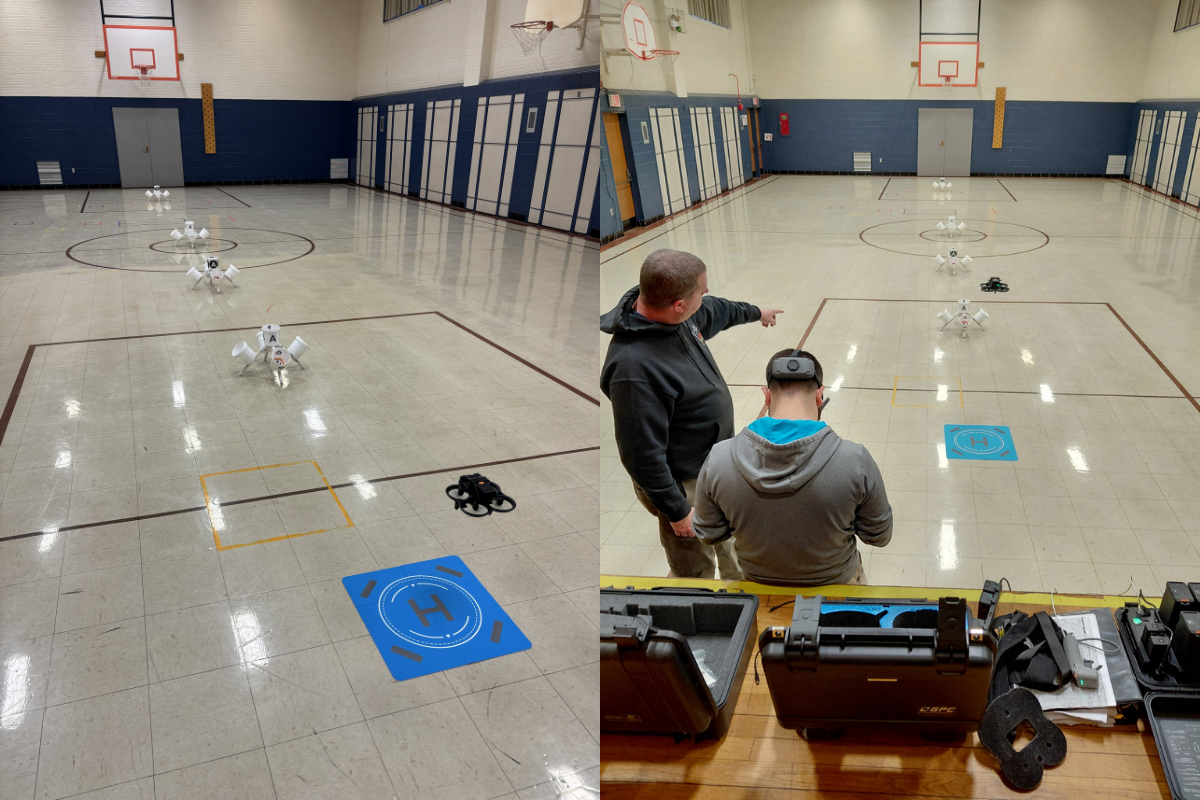
Public safety drone pilots flying standardized NIST flight course
How We Integrate NIST Training into Our 2-Day Drone Operations & Flight Training Class
NIST-based flight exercises are a core component of our Drone Operations & Flight Training (2-day class). The course balances operational context, safety considerations, and hands-on flight proficiency to ensure training is practical and applicable.
Pilots receive instructor-guided feedback throughout the course, with progressive skill building that mirrors real-world operational demands. The emphasis is on standards, repetition, and readiness — the same principles that underpin airline recurrent training.
This approach ensures pilots leave not only with improved skills, but with a clear understanding of what professional flight performance looks like.
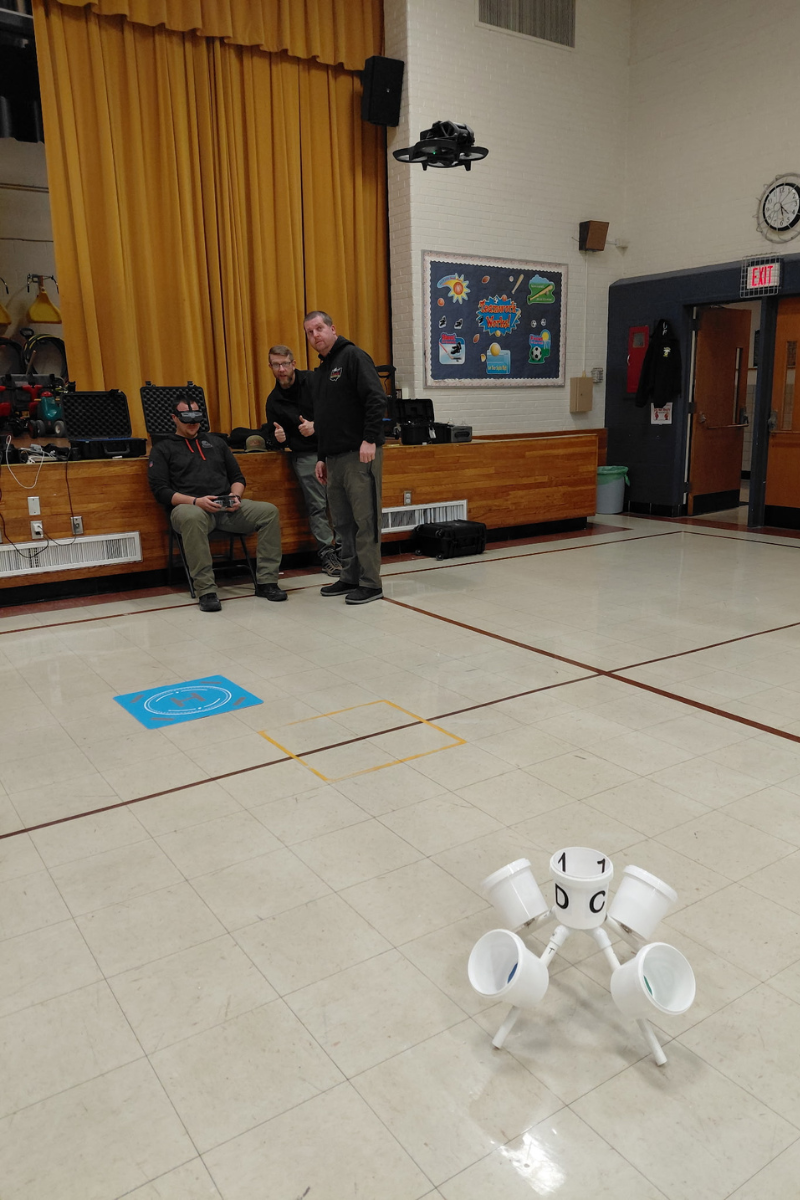
Police officers completing NIST-based drone flight training course
Building Mission-Ready Drone Programs Through Ongoing Training
For command staff and program managers, structured flight training is more than a technical exercise. It is a leadership decision that directly impacts safety, performance, and program credibility.
NIST-based training provides a defensible framework for both learning and refresher training, helping organizations maintain high standards over time rather than relying on ad-hoc flying.
Mission-ready drone programs are built through intentional, ongoing training — not last-minute preparation.
Related Resources for Public Safety UAS Leaders
DFR and Shielded Operations increase both capability and risk. Read Jason Damman’s Police1 article on why agencies should build aviation-level training, SOPs, risk management, crew coordination, and recurrent proficiency before scaling advanced drone operations.
If your organization is looking to strengthen flight proficiency, reinforce safety standards, or implement structured refresher training, we invite you to learn more about our Drone Operations & Flight Training (2-day class) or Request a Consultation to discuss your training needs.